
研 鎂 生 技
Security Assessment
(In-vitro, OECD non-animal alternatives trial)
In response to the global trend of "animal-free" cosmetics, we have adopted OECD international standard certification for non-animal alternative testing. Through recombinant human tissue models and cell identification technology, we accurately assess the skin and eye irritation and safety of products in the laboratory, establishing an internationally professional image for the brand that combines ethics and scientific evidence.
CORE TECHNOLOGIES & APPLICATIONS
Application Examples:
-
Phototoxicity - OECD 432 3T3 NRU photo-toxicity test
-
Skin irritation - OECD 439 Human epidermal tissue Skin Irritation Test
-
Skin sensitization - OECD 442C Direct peptide reactivity assay (DPRA) (Peptide/amino acid derivative reaction test)
-
Skin sensitization - OECD 442E Human cell line activation test (h-CLAT)
-
Mutagenicity (gene mutation) - OECD 471: Bacterial Reverse Mutation Test (Ames Assay)
-
Eye damage - OECD 491 Short time exposure (STE) in vitro method
-
Eye irritation - OECD 492 Recombinant human corneal tissue Eye Irritation Test
-
Cytotoxicity - ISO 10993-5 Cell Cytotoxicity Test
-
Skin barrier - Human epidermal tissue Skin Barrier Test
-
Transdermal absorption rate - Franz diffusion cell


Mutation (genetic mutation) - OECD 471: Bacterial Reverse Mutation Test (Ames Assay)
By using bacterial reverse mutation assays, we can detect whether the test substance has the potential to induce gene mutations, ensuring at the molecular level that the product ingredients do not pose a risk of genotoxicity.
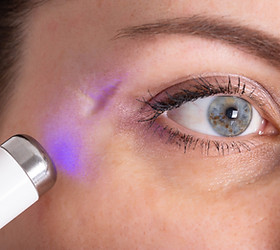
Eye Irritation - OECD 492 Recombinant Human Corneal Tissue Eye Irritation Test
By reconstructing human corneal tissue models, we observe the effects of ingredients on the ocular mucosa to ensure that bath products or eye care products are gentle and non-irritating.

Cytotoxicity - ISO 10993-5 Cell Cytotoxicity Test
According to international medical device standards, assessing the effects and toxic reactions of components on in vitro cells is a fundamental indicator for judging the safety and biocompatibility of raw materials.